
Dashboards: common pitfalls and good practice
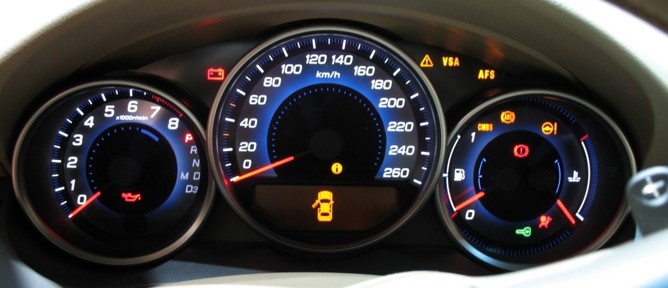
Like the dashboard of a car, business dashboards provide essential information on the state of activities, enabling effective, well-informed steering – provided that the data displayed is useful and reflects the reality of the situation.
Formally, a dashboard is defined as a “ visual display of the most important information needed to achieve one or more objectives. This information is consolidated and arranged on a single screen, so it can be monitored at a glance ”. (Stephen Few, Information Dashboard Design, 2006)
The purpose of the performance dashboard is therefore to measure, at regular intervals, the activities of an entity (company, subsidiary, department, …), giving a quantitative or qualitative measure of performance relative to the objectives set. It is the essential tool for deploying and putting the company strategy into action.
The ISO 9000 approach of the 1990s popularised the massive deployment of indicators. Today every business management tool delivers its own set of standard indicators, more or less suited to the specific needs of the company.
Common pitfalls:
First, this existing screen of data from management tools gives the impression that all it takes to set up dashboards and thus meet the need for visibility is to change or buy a new program. This approach stems from a recurring shortcut that confuses the tool that assembles, formats and displays the data with the well-defined organisational processes that collect it.
Second, the thirst for knowledge and measurement, made easier by digitalisation, has generated a flood of indicators at every level of the company.
“If you can’t convince them, confuse them ”. This quotation attributed to Harry S. Truman illustrates a common failing of some managers, who tend to take refuge behind a battery of more or less meaningful figures, trying to reassure themselves with quantity and to justify themselves through action, but losing sight in the process of what is essential: the purpose and the objectives.
The profusion of metrics dilutes the essential information and often means that the data collected does not play its role and leaves its users doubtful.
Confusing the container and the content, and convincing oneself that more is better, inevitably leads to disappointed expectations, wasted time and money, unusable data, demotivated employees and a bureaucracy that feeds itself to keep the indicators up to date. In this context, filling in the tables and reports becomes a reason for being in itself, more important than achieving the company’s objectives.
Good practice:
Before investing heavily to gather data in the hope of better controlling a situation, it is essential to answer some fundamental questions. For while data collection may seem reassuring, it can also prove useless if the target is wrong.
To this end, good practice for building dashboards, with the selection of their indicators, consists in asking oneself the following questions:
What are the purposes and objectives? What exactly do we want to measure? For whom? Why? What data do I already have or could make better use of? How is it collected, by whom, and how? What data is missing?
The final choice of tool then becomes secondary and the logical consequence of the definition and stocktaking work carried out beforehand.
Setting up relevant dashboards is therefore a business project undertaking. It stems from the strategy, affects the organisation and operations, and ends in a display provided by a tool.
Only a holistic approach, wisely supported by a professional, will ensure a simple and meaningful result, providing the relevant data to the managers concerned for adequate steering towards the objectives set.
The manager is a pilot. Their mission is to steer the company in the right direction, and it is up to them to take decisions and make sound choices. Performance indicators must be useful and relevant to them so that their decisions allow the company’s objectives to be achieved.
Interested in our articles and developments? Follow our LinkedIn page.
Would you like to know more about how Enatis can support your development? Feel free to contact us with no obligation.